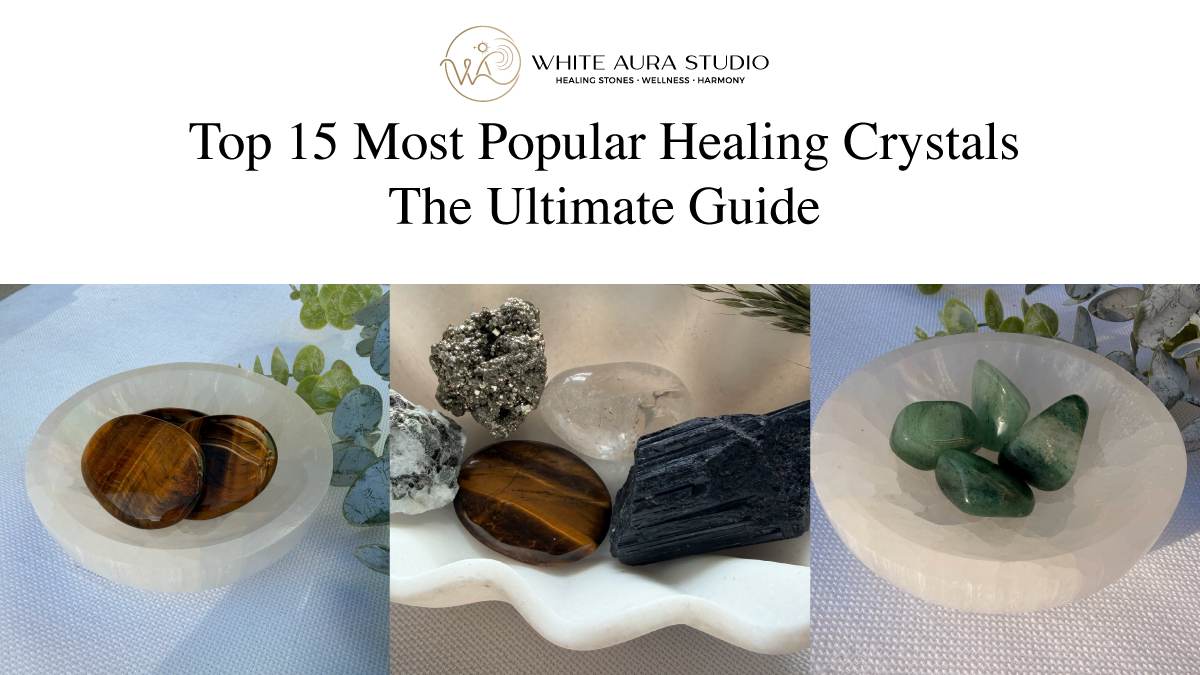
Crystals have been part of human culture for thousands of years used in ancient jewelry, burial sites, medicine cabinets, and spiritual rituals across nearly every civilization. Today, they’ve found a new life on nightstands, in yoga studios, and in pockets everywhere, valued for their beauty and the meaning people attach to them.
This guide walks through 15 of the most popular healing crystals, what each is traditionally associated with, and how people typically use them.
1. Clear Quartz
Known as the “master healer,” clear quartz is prized for its clarity and versatility. It’s often used to amplify the properties of other stones and is a good starting point for anyone new to crystals.
Traditionally associated with: clarity, amplification, general balance Common use: meditation, paired with other stones
2. Amethyst
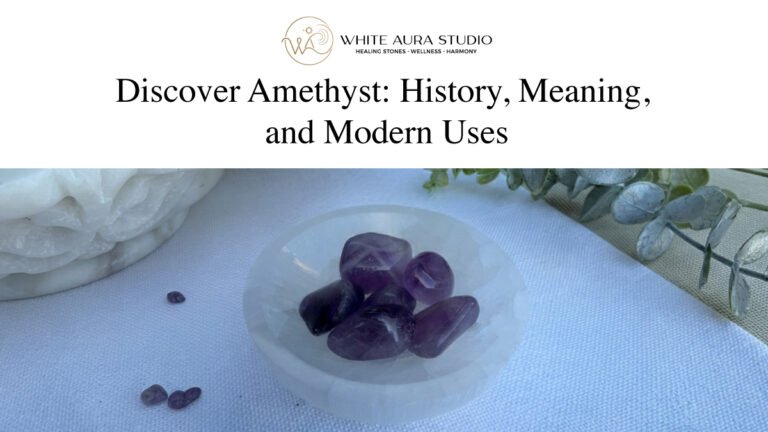
A purple variety of quartz, amethyst is one of the most recognizable crystals thanks to its color and calming reputation.
Traditionally associated with: calm, restful sleep, intuition Common use: bedside table, meditation
3. Rose Quartz
Soft pink and gentle in appearance, rose quartz is closely tied to themes of love — both self-love and relationships with others.
Traditionally associated with: compassion, emotional healing, self-love Common use: worn as jewelry, kept near the heart
4. Citrine
A warm yellow-to-orange stone often nicknamed the “merchant’s stone” for its association with abundance and positivity.
Traditionally associated with: confidence, abundance, optimism Common use: kept in a workspace or wallet
5. Black Tourmaline
A deep black, opaque stone often used for grounding and protection.
Traditionally associated with: protection, grounding, shielding from negative energy Common use: placed near entryways, carried during stressful periods
6. Tiger’s Eye
Golden-brown with a shimmering, silky luster, tiger’s eye gets its name from its resemblance to the eye of its namesake animal.
Traditionally associated with: confidence, courage, grounding Common use: carried for motivation, worn as jewelry
7. Selenite
A translucent white crystal known for its soft glow and layered, fibrous structure.
Traditionally associated with: clarity, cleansing, calm Common use: used to “cleanse” other crystals, placed in meditation spaces
8. Lapis Lazuli
A deep blue stone flecked with gold pyrite, historically prized by ancient Egyptian and Mesopotamian cultures.
Traditionally associated with: wisdom, truth, insight Common use: jewelry, meditation
9. Moonstone
A pearly, iridescent stone with a shifting sheen, associated for centuries with the moon and cycles of change.
Traditionally associated with: intuition, new beginnings, emotional balance Common use: worn as jewelry, kept during periods of transition
10. Malachite
A deep green banded stone with a distinctive swirling pattern.
Traditionally associated with: transformation, protection, emotional release Common use: decorative pieces, occasionally jewelry (note: raw malachite dust can be toxic, so only handle finished, sealed pieces)
11. Carnelian
A warm orange-red stone with a smooth, waxy appearance.
Traditionally associated with: motivation, creativity, vitality Common use: carried for energy, kept on a desk
12. Smoky Quartz
A brownish-gray variety of quartz known for its grounding, earthy tone.
Traditionally associated with: grounding, stress relief, emotional stability Common use: meditation, carried during high-stress periods
13. Aquamarine
A pale blue-green stone named for its resemblance to seawater.
Traditionally associated with: calm communication, clarity, soothing emotions Common use: jewelry, kept during public speaking or difficult conversations
14. Rainbow Fluorite
Banded in purples, greens, and blues, fluorite is nicknamed the “genius stone” for its reputation around mental clarity.
Traditionally associated with: focus, decision-making, balance Common use: kept on a desk or study space
15. Garnet
A deep red stone historically associated with vitality and passion, and one of the oldest gemstones used in jewelry.
Traditionally associated with: vitality, strength, passion Common use: jewelry, carried for energy and motivation
How to Choose Among Them
With this many options, it helps to narrow things down by:
- What draws your eye — color and shape matter; you’re more likely to actually use a stone you’re drawn to.
- What you’re looking for — grounding, calm, confidence, focus, and so on.
- Practicality — some stones (like malachite) need extra care and shouldn’t be handled raw, while others (like clear quartz or tiger’s eye) are low-maintenance and durable enough for daily carry.
Simple Ways to Work With Healing Crystals
- Carry one in a pocket or bag as a daily touchstone.
- Hold one during meditation as a physical focal point.
- Place them around your home — an entryway, a desk, a nightstand — based on their traditional associations.
- Wear them as jewelry for something you’ll interact with throughout the day.
- Pair a few together if you’re working toward more than one goal (e.g., citrine for confidence with black tourmaline for grounding).
Final Thoughts
Whether you’re drawn to crystals for their beauty, their history, or the intentions people associate with them, starting with one or two stones that genuinely appeal to you is the best approach. From there, it’s easy to build a small collection that reflects what you’re looking for in your day-to-day life.
Note: The properties described above reflect long-standing folk and spiritual traditions, not clinically proven medical treatments. If you’re managing a health concern, it’s best to consult a qualified healthcare professional.