
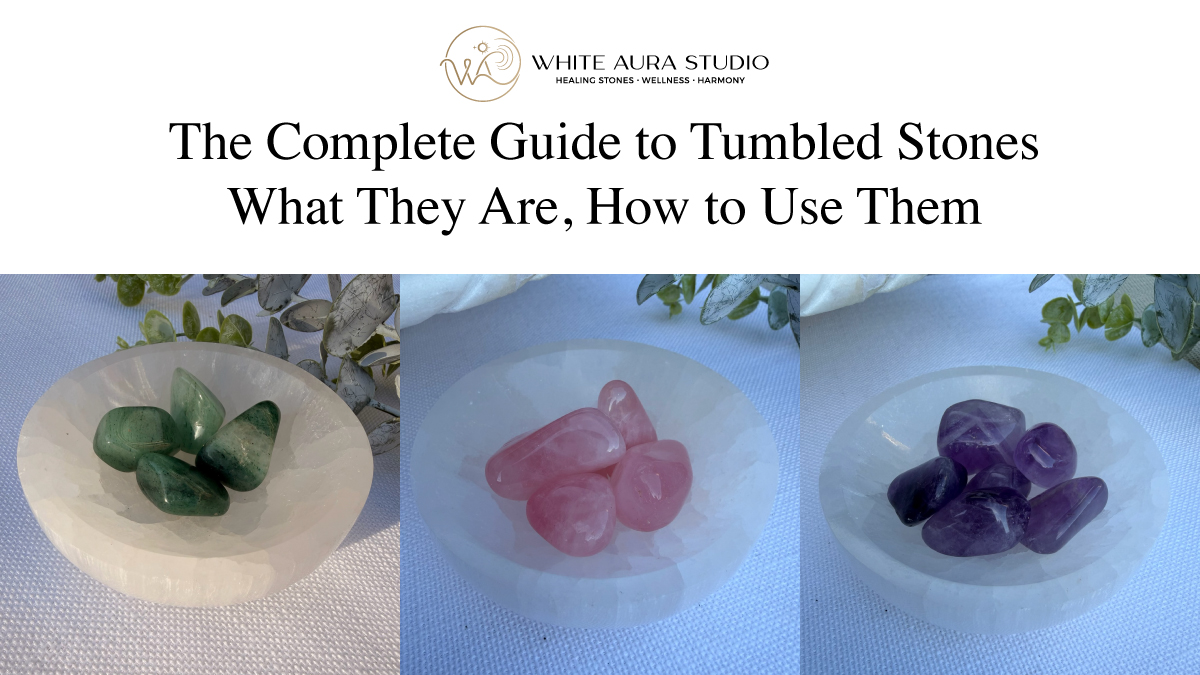
If you’ve ever browsed a metaphysical shop, a farmers market booth, or a friend’s windowsill collection, you’ve probably run into a small basket or jar of smooth, glossy little rocks in every color imaginable. Those are tumbled stones and they’re one of the most accessible, affordable ways to bring crystals and natural stone into everyday life.
This guide covers what tumbled stones actually are, how they’re made, how to pick ones that suit you, and practical ways people incorporate them into daily routines.
What Exactly Is a Tumbled Stone?
A tumbled stone starts out as a rough, unpolished piece of mineral or rock often collected from riverbeds, quarries, or mines. Through a mechanical polishing process (more on that below), it’s transformed into a smooth, rounded, glassy-finished piece that fits comfortably in your palm.
Humans have been drawn to polished stones for thousands of years. Ancient Egyptian, Greek, and Roman artisans shaped and set semi-precious stones into amulets, seals, and jewelry, often believing certain minerals carried protective or healing qualities. Modern tumbled stones carry that same appeal forward minus the need for a stonecutter’s workshop.
How Tumbling Works
The tumbling process is essentially controlled erosion, compressed into weeks instead of centuries.
- Rough selection — Raw stone is sorted for size and quality, and any especially fractured or unstable pieces are set aside.
- Coarse grinding — The rough stones go into a rotating tumbler barrel with a coarse abrasive grit. This stage knocks off sharp edges and starts shaping the stone.
- Progressive polishing — Over several rounds, the grit is swapped for progressively finer abrasives, gradually smoothing out scratches left by the previous stage.
- Final polish — A polishing compound (often aluminum oxide or tin oxide) brings out the glassy shine tumbled stones are known for.
Depending on the hardness of the stone and the desired finish, this cycle can take anywhere from a few weeks to a couple of months. Harder stones like quartz or agate hold up well to the process; softer stones need gentler handling to avoid pitting.
Popular Types of Tumbled Stones
There’s a huge range of tumbled stones available, each with a distinct look and set of traditional associations. A few standouts:
- Clear Quartz — Often called the “master healer” in crystal circles, valued for its clarity and versatility.
- Amethyst — A purple quartz variety associated with calm, clarity, and restful sleep.
- Rose Quartz — Soft pink, commonly linked to self-love and emotional warmth.
- Rainbow Fluorite — Banded in purples, greens, and blues; nicknamed the “genius stone” for its association with focus and mental clarity.
- Tiger’s Eye — Golden-brown and shimmering, associated with confidence and grounding.
- Agate — Known for its banded patterns, often linked to stability and balance.
- Jasper — An opaque, earthy stone associated with grounding energy.
- Lapis Lazuli — A deep blue stone historically prized by ancient civilizations, associated with insight and truth.
Trying a few types is a bit like sampling flavors some will resonate with you right away, others might not, and that’s completely normal.
How to Choose the Right Tumbled Stones for You
A few practical things to consider when picking stones:
- Look and feel first. Color, pattern, size, and weight in your hand matter you’re more likely to actually use a stone you’re drawn to.
- Intention second. If you’re choosing based on traditional associations (calm, focus, grounding, etc.), pick a stone whose reputation matches what you’re hoping to bring into your day.
- Quality check. Good tumbled stones should feel smooth all over with no rough patches, cracks, or dull spots that indicates a properly finished polish.
Caring for Your Tumbled Stones
Tumbled stones are low-maintenance, but a few habits help them stay in good shape:
- Wipe with a soft, damp cloth rather than harsh chemical cleaners.
- Avoid prolonged direct sunlight for stones prone to fading (amethyst is a common one).
- Keep away from extreme temperature swings, which can cause micro-cracking over time.
- Store softer stones separately from harder ones to avoid surface scratching.
Ways to Use Tumbled Stones
Tumbled stones are popular precisely because they’re so versatile:
- Pocket stones — Many people carry a small stone in a pocket or bag as a tactile touchstone throughout the day.
- Meditation aid — Holding a stone during meditation gives your hands something grounding to focus on.
- Home décor — A bowl of tumbled stones, a small terrarium, or a stone-lined windowsill adds natural texture to a room.
- Jewelry making — Wire-wrapped or drilled tumbled stones are a popular DIY jewelry material.
- Thoughtful gifts — A single stone paired with its meaning makes a simple, low-cost, personal gift.
Final Thoughts
Tumbled stones offer an easy, low-cost entry point into working with natural stone whether your interest is aesthetic, spiritual, or just enjoying something tactile on your desk. Start with a stone that catches your eye, learn a bit about its traditional associations, and go from there.
Note: Tumbled stones and their associated properties are part of long-standing folk and spiritual traditions rather than clinically proven treatments. If you’re dealing with a health concern, it’s always best to consult a qualified healthcare professional.